What is a Silabario PDF?
Silabario PDFs are digital versions of Adrián Dufflocq Galda-mes’ educational tool, designed for Spanish literacy, initially published in 1953.
These documents preserve the original’s syllable-based approach to reading, offering access to a landmark publication in digital format.
Key Aspects:
- Digital preservation of a classic literacy tool.
- Focuses on Spanish language learning through syllables.
- Facilitates remote learning and wider accessibility.
Definition and Purpose
A Silabario PDF represents a digitized version of a specific pedagogical tool – Adrián Dufflocq Galda-mes’ “Silabario” – created to facilitate initial literacy in the Spanish language. Unlike traditional alphabetic methods focusing on individual letters, this approach centers on syllables as the fundamental building blocks of reading.
The core purpose of the Silabario is to provide a structured, phonetic pathway for children to decode and encode Spanish words. It aims to make the initial stages of reading more accessible by breaking down the complexities of the language into manageable, pronounceable units. The 1953 edition, and subsequent versions, were designed to “make easy the path” for young learners, as stated in the author’s dedication.
The PDF format ensures preservation and wider distribution of this influential educational resource.
Historical Context of Silabarios
The concept of a “silabario” – a writing system representing syllables rather than individual phonemes – predates Dufflocq’s 1953 publication. Historically, silabarios were common in languages where consonant-vowel combinations formed distinct, easily recognizable units. However, their application to Spanish was a deliberate pedagogical choice.
Dufflocq’s work emerged within a broader context of 20th-century educational reforms focused on improving literacy rates in Latin America. His Silabario, reaching its 100th edition, represented a significant attempt to address the specific challenges of Spanish language acquisition. The dedication to “niños de habla española” highlights a pan-American focus.
The PDF format now allows for the preservation and study of this historical approach to literacy, offering insights into past educational philosophies.

Adrián Dufflocq Galda-mes’ Silabario
Adrián Dufflocq Galda-mes’ 1953 Silabario, with CORE’s illustrations, aimed to simplify Spanish reading for children, reaching a 100th edition.
Author Biography and Educational Philosophy
Adrián Dufflocq Galda-mes, the Chilean author of the Silabario, dedicated himself to improving Spanish language education. His work stemmed from a deep understanding of both the mechanics of the Spanish language and the principles of child psychology. He believed in a methodical approach to literacy, meticulously crafting the Silabario after extensive study and practical experience.
Dufflocq’s philosophy centered on making the initial stages of reading accessible and enjoyable for young learners. He aimed to bypass the complexities of traditional methods, focusing instead on a syllable-based progression. This approach, combined with the engaging illustrations by CORE, was intended to foster a positive learning experience and build a strong foundation in reading and language skills. His dedication is evident in the book’s enduring legacy and numerous editions.
The 1953 Edition: A Landmark Publication
The initial 1953 publication of Adrián Dufflocq Galda-mes’ Silabario marked a significant moment in Spanish literacy education. Bearing the copyright of that year, and inscribed with registration number 10.533, it quickly gained recognition for its innovative pedagogical approach. The book’s dedication, “A LOS NInOS.DE HABLA ESPAROLA,” highlights its intended audience and the author’s fervent desire to simplify the learning process.
Notably, the 10th edition received a prologue from the celebrated Uruguayan poet, Juana de Ibarbourou, praising the Silabario as a “perfect book” for children. This endorsement, alongside a government decree acknowledging its value, solidified its position as a leading resource. The 1953 edition laid the groundwork for subsequent revisions and its lasting impact.
Key Features of the Silabario
The Silabario uniquely employs a phonetic, syllable-based reading method, enhanced by CORE’s illustrations, specifically designed for mastering the Spanish language.
Phonetic Approach to Reading
Adrián Dufflocq Galda-mes’ Silabario champions a distinctly phonetic approach to reading instruction, diverging from traditional alphabetic methods. Instead of focusing on individual letters, the Silabario introduces reading through syllables – combinations of consonants and vowels. This method aims to accelerate the decoding process, allowing learners to quickly progress from recognizing sounds to forming words.
The core principle lies in building reading skills incrementally, starting with simple syllables and gradually increasing complexity. This systematic progression is intended to minimize frustration and foster a sense of accomplishment in young learners. The author’s careful study of the Spanish language’s mechanics underpinned this approach, ensuring a logical and effective pathway to literacy. This contrasts with methods prioritizing whole-word recognition, offering a structured foundation for pronunciation and comprehension.
Visual Aids and Illustrations (CORE’s Contributions)
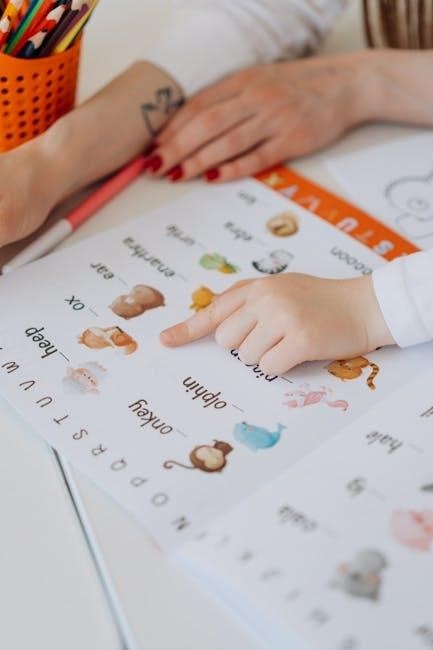
The 1953 Silabario significantly benefited from the artistic contributions of CORE (Corporación de Representaciones Educativas), whose illustrations were integral to its pedagogical success. These weren’t merely decorative; they were carefully designed to reinforce phonetic learning and vocabulary acquisition. Each syllable and word was often accompanied by a clear, engaging image, aiding comprehension and memorization for young readers.
CORE’s visual style aimed to be accessible and appealing to children, fostering a positive learning experience. The illustrations served as contextual cues, linking sounds and words to real-world objects and concepts. This multi-sensory approach – combining visual and phonetic elements – enhanced the effectiveness of the Silabario, making it a landmark publication in Chilean education.

Focus on Spanish Language Learning
Adrián Dufflocq Galda-mes’ Silabario was meticulously crafted to address the specific challenges of learning the Spanish language. Unlike alphabetic methods, it prioritized a syllable-based approach, recognizing the phonetic structure of Spanish. This method facilitated smoother transitions into reading, building fluency through recognizable sound combinations.
The Silabario’s content was designed to immerse learners in the Spanish language, introducing vocabulary and grammatical structures gradually. It aimed to make the “camino” (path) to literacy “llano y fácil” (smooth and easy), as stated in the author’s dedication. The book’s enduring popularity across Spanish-speaking countries demonstrates its effectiveness in fostering language acquisition.
Content Breakdown of the Silabario PDF
The Silabario PDF systematically progresses through syllables, introducing vocabulary and early reading exercises, building foundational skills for Spanish language mastery.
Core Components:
- Syllable-based progression for phonetic understanding.
- Gradual vocabulary expansion for comprehension.
- Exercises to reinforce reading skills.
Syllable-Based Learning Progression
The Silabario’s core methodology centers around a carefully structured, syllable-based learning progression. Unlike traditional alphabetic methods, it doesn’t begin with individual letters but instead focuses on combining sounds to form syllables – the building blocks of Spanish words. This approach aims to make reading more accessible and intuitive for young learners.
The PDF meticulously introduces syllables in a specific order, starting with simple combinations and gradually increasing complexity. This systematic approach allows children to decode words more easily, fostering confidence and a sense of accomplishment. Each syllable is presented with clear pronunciation guidance, aiding in accurate sound production. The progression is designed to build upon previously learned concepts, ensuring a solid foundation for future reading development.
This method, as evidenced by the Silabario’s enduring popularity, provides a structured pathway to literacy, prioritizing phonetic awareness and decoding skills.
The Silabario PDF doesn’t solely focus on decoding; it actively integrates vocabulary introduction and expansion throughout the learning process. Following the mastery of initial syllables, the text introduces simple, everyday words constructed from those syllables. This contextualized learning reinforces phonetic understanding while simultaneously building a practical vocabulary base.
New words are often accompanied by illustrative examples, aiding comprehension and retention. The progression isn’t merely about recognizing sounds but about understanding their meaning within a communicative context. As learners advance, the vocabulary expands, incorporating more complex words and phrases, always building upon previously learned concepts.
This deliberate approach ensures that reading isn’t just a mechanical skill but a gateway to understanding and engaging with the Spanish language.
Early Reading Exercises
The Silabario PDF incorporates a series of carefully designed early reading exercises to solidify the foundational skills taught. These exercises begin with simple syllable repetition, progressing to the reading of short, phonetically regular words. The structure emphasizes gradual progression, ensuring learners build confidence and fluency.
Exercises often involve identifying syllables within words, completing missing letters, and reading short sentences. The PDF format allows for interactive practice, with opportunities for learners to write directly onto the document or utilize accompanying digital tools.
These initial exercises are crucial for establishing a strong reading foundation, preparing students for more complex texts and fostering a positive learning experience.
The Silabario’s Impact on Education
The Silabario significantly impacted Spanish literacy, reaching numerous countries and achieving 100 editions by 2002, becoming a cornerstone of early education.
Notable Impacts:
- Widespread adoption across Spanish-speaking nations.
- Influenced subsequent literacy program development.
- The 100th edition marked a significant milestone.
Reception in Spanish-Speaking Countries
Adrián Dufflocq Galda-mes’ Silabario experienced a remarkably positive reception throughout Latin America and Spain. The text, initially released in 1953, quickly gained traction as an effective tool for initiating children into the world of reading and writing in Spanish. Its syllable-based methodology resonated with educators seeking a structured and accessible approach to literacy.
The book’s success is evidenced by its reaching a significant 100th edition milestone by 2002, demonstrating sustained demand and pedagogical value. The author’s dedication, coupled with CORE’s illustrative contributions, created a visually engaging and pedagogically sound resource. This widespread acceptance solidified the Silabario’s position as a foundational text in many Spanish-speaking schools, shaping generations of readers.
Key Indicators of Success:
- Rapid adoption across diverse educational systems.
- Positive feedback from teachers and parents.
- Prolonged publication history and multiple editions.
Influence on Subsequent Literacy Programs
Adrián Dufflocq Galda-mes’ Silabario profoundly influenced the development of subsequent literacy programs across Spanish-speaking nations. Its core principle – a phonetic, syllable-based approach – served as a model for many early reading curricula. Educators recognized the effectiveness of breaking down language into manageable phonetic units, fostering a smoother transition to independent reading.
The Silabario’s emphasis on visual aids, thanks to CORE’s illustrations, also inspired the integration of imagery into other learning materials. This approach acknowledged the importance of engaging multiple senses in the learning process. While methodologies evolved, the Silabario’s legacy remains visible in the continued prioritization of phonics and visual learning within contemporary Spanish literacy initiatives.
Lasting Impacts:
- Adoption of syllable-based learning in curricula.
- Increased use of visual aids in educational materials.
- Foundation for modern Spanish literacy programs.
The 100th Edition and its Significance
The 100th edition of Adrián Dufflocq Galda-mes’ Silabario, celebrated by poet Juana de Ibarbourou, marked a pivotal moment in its history and solidified its place as a cornerstone of Spanish literacy education. Reaching this milestone in 1953 demonstrated the enduring relevance and widespread adoption of the method across Latin American countries.
Ibarbourou’s prologue eloquently praised the Silabario as a “perfect book” for children, highlighting its accessibility and effectiveness. This edition symbolized a commitment to improving educational opportunities and fostering a love of language. The achievement underscored the author’s dedication and the positive impact of his pedagogical approach, ensuring its continued influence for generations.
Key Highlights:
- Recognition of enduring relevance and impact.
- Celebration of a significant publishing milestone.
- Validation by prominent literary figure, Juana de Ibarbourou.
Accessing and Utilizing Silabario PDFs Today
Silabario PDFs are readily available online through platforms like Memoria Chilena, enabling remote learning and providing convenient access to this classic educational resource.
Practical Uses:
- Digital access for educators and learners.
- Facilitates remote Spanish literacy instruction.
- Printable copies for traditional use.
Online Availability and Digital Resources
Silabario PDFs are increasingly accessible through various online archives and digital libraries, democratizing access to this important educational tool. Memoria Chilena, for example, hosts a digitized version (MC0002274.pdf) of the 1953 edition, allowing global access to its content.
Beyond direct PDF downloads, several websites offer supplementary resources related to the Silabario method. These include interactive exercises, downloadable worksheets, and online communities for educators sharing best practices. The digital format allows for easy sharing and integration into modern learning management systems.
Furthermore, the availability of searchable PDFs enables researchers and educators to analyze the Silabario’s pedagogical approach and its historical context. This digital preservation ensures its continued relevance for generations to come, fostering Spanish literacy worldwide.
Using PDFs for Remote Learning
Silabario PDFs are exceptionally well-suited for remote learning environments, offering a cost-effective and readily available resource for Spanish literacy instruction. The digital format allows for easy screen sharing during virtual lessons, enabling teachers to guide students through the syllable-based exercises.
PDFs facilitate interactive learning through annotation tools, allowing students to practice writing syllables and words directly on the document. Printable worksheets, derived from the PDF content, can be distributed for offline practice, reinforcing concepts learned online.
The portability of PDFs also allows students to access the Silabario on various devices – computers, tablets, and smartphones – promoting flexible learning schedules and personalized instruction. This adaptability makes it an invaluable tool for educators navigating the challenges of remote education.
Printing and Physical Copies
While Silabario PDFs offer digital convenience, the option to print physical copies remains valuable for many learners. Printing allows for a tactile learning experience, beneficial for kinesthetic students who benefit from physically manipulating materials. A printed Silabario mirrors the original 1953 publication, offering a traditional approach to literacy instruction.
Teachers can selectively print specific sections or exercises, creating customized workbooks tailored to individual student needs. The PDF format ensures high-quality printing, preserving the clarity of illustrations and text.
Despite the rise of digital learning, many educators and parents still appreciate the benefits of a physical copy for focused practice and reduced screen time, maintaining a connection to the book’s historical significance;
Comparison with Other Early Reading Methods
Silabario differs from alphabetic and whole language approaches by focusing on syllables, providing a structured path to decoding Spanish words for beginners.
Distinctive Features:
- Syllable-based, unlike letter-focused alphabetic methods.
- More structured than the holistic whole language approach.
Silabario vs. Alphabetic Method
The Silabario method, as embodied in Adrián Dufflocq Galda-mes’ work, presents a distinct contrast to traditional alphabetic approaches to early reading instruction. While the alphabetic method prioritizes learning individual letter sounds and then blending them to form words, the Silabario focuses on mastering syllables first.
This means learners begin by recognizing and pronouncing common Spanish syllables – like “ma,” “pa,” “si,” and “so” – before progressing to complete words. This approach can be advantageous for Spanish, given its relatively consistent phonetic structure. The Silabario aims to build reading fluency by establishing a foundation of recognizable syllable patterns, potentially accelerating the decoding process for young learners compared to a purely letter-sound focused method.
However, some argue that the alphabetic method fosters a deeper understanding of the underlying principles of language.
Silabario vs. Whole Language Approach
Comparing the Silabario method to the whole language approach reveals fundamental differences in early literacy instruction. Whole language emphasizes immersing children in rich literature and encouraging them to construct meaning from text, often delaying explicit phonics instruction. Conversely, the Silabario, exemplified by Dufflocq Galda-mes’ work, is a structured, systematic approach centered on syllable recognition and phonetic decoding.
While whole language prioritizes comprehension and enjoyment, the Silabario focuses on building a solid foundation in the mechanics of reading. The Silabario’s syllable-based progression offers a more controlled introduction to the Spanish writing system, potentially benefiting learners who require explicit guidance.
However, critics suggest the Silabario might lack the contextual richness valued by whole language advocates.
Criticisms and Limitations of the Silabario Method
Despite its success, the Silabario method faced critique for potential rigidity and challenges for learners needing varied approaches to phonetic decoding.
Considerations:
- May not suit all learning styles effectively.
- Requires adaptation for modern pedagogical needs.
Potential Challenges for Learners
While effective for many, the Silabario method isn’t without potential hurdles for some learners. The strict syllable-based approach, while building a strong phonetic foundation, can sometimes feel restrictive, potentially hindering a more fluid transition to reading connected text.
Students accustomed to or benefiting from a more holistic, whole-language approach might initially struggle with the segmented nature of the Silabario; Furthermore, the method’s reliance on memorizing syllable combinations could present difficulties for learners with auditory processing challenges or those who thrive on contextual clues.
Adapting the method to cater to diverse learning needs and incorporating supplementary materials that encourage reading comprehension alongside phonetic skills is crucial for maximizing its effectiveness.
Adaptations for Modern Educational Needs
To remain relevant, the Silabario method requires thoughtful adaptation for contemporary classrooms. Integrating interactive digital resources alongside the PDF format can enhance engagement and cater to diverse learning styles. Supplementing syllable practice with activities promoting reading comprehension and critical thinking is essential.
Modern adaptations should also prioritize inclusivity, offering support for learners with dyslexia or other learning differences. Utilizing multi-sensory approaches – incorporating visual, auditory, and kinesthetic elements – can strengthen phonetic understanding.
Furthermore, connecting Silabario lessons to real-world contexts and culturally relevant materials will foster a more meaningful and motivating learning experience for today’s students.